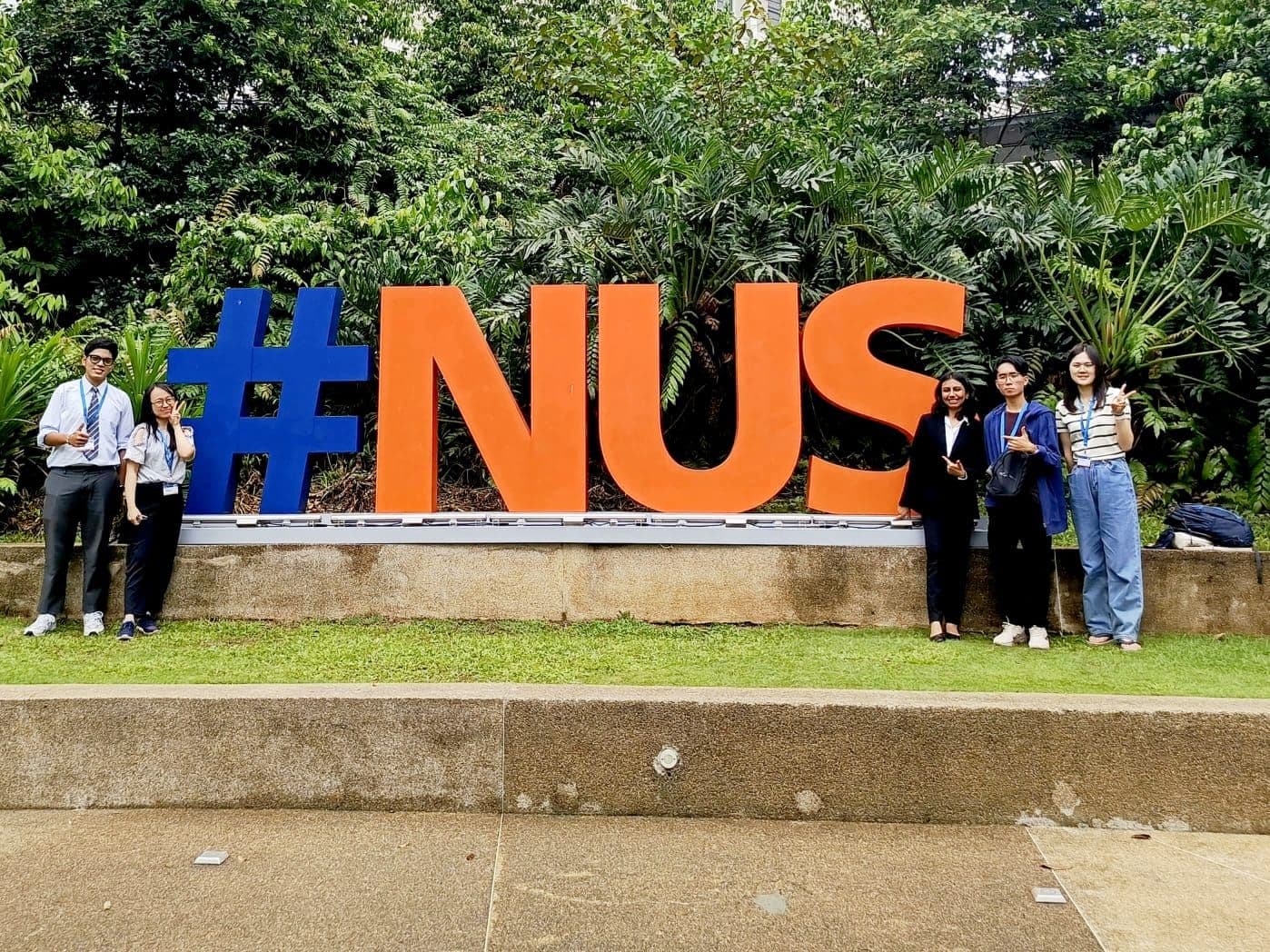
One week in Singapore. A hundred strangers from twenty-two countries. And one big question hanging over all of it: how is generative AI reshaping research? This is what the 2025 NUS Young Fellowship taught me about asking sharper questions, thinking across disciplines, and what a researcher’s life actually looks like (spoiler: a lot more fun than I expected).
How It Started
Late one April evening, head-down in semester work, an email slid into my inbox: “Congratulations! You have been selected for the 2025 NUS Young Fellowship Programme.” I read it twice. Then I jumped.A fully funded, week-long residential programme at the National University of Singapore in June, followed by two months of engaging online sessions, it felt like an opportunity too exciting to be real.
I had applied on a whim, answering the SOP honestly rather than impressively. Apparently that was the right call.
The Application Process
So how did I actually get in? It was a cool, dry day in Indore, a few weeks after my pre-final-year winter break(probably second week of January), when an email from the DUGC CSE caught my eye: “Call for Applicants: NUS Young Fellowship Programme 2025.” The phrase “nearly free trip to Singapore” did most of the convincing.
The ask was simple on paper: a statement of purpose, my CV, and two recommendation letters. The letters were easy since I’d already worked with the professors; the SOP was the real test, so I leaned on a few seniors and blogs before writing my own. The one catch was having to take a week off mid-internship. I sent the application with my fingers crossed and no backup plan, and the selection came through anyway. I genuinely didn’t believe my first solo international trip was happening until the visa and tickets were in my hands. As for the internship? My project was well ahead of schedule, and my manager didn’t mind one bit. :)
Getting There
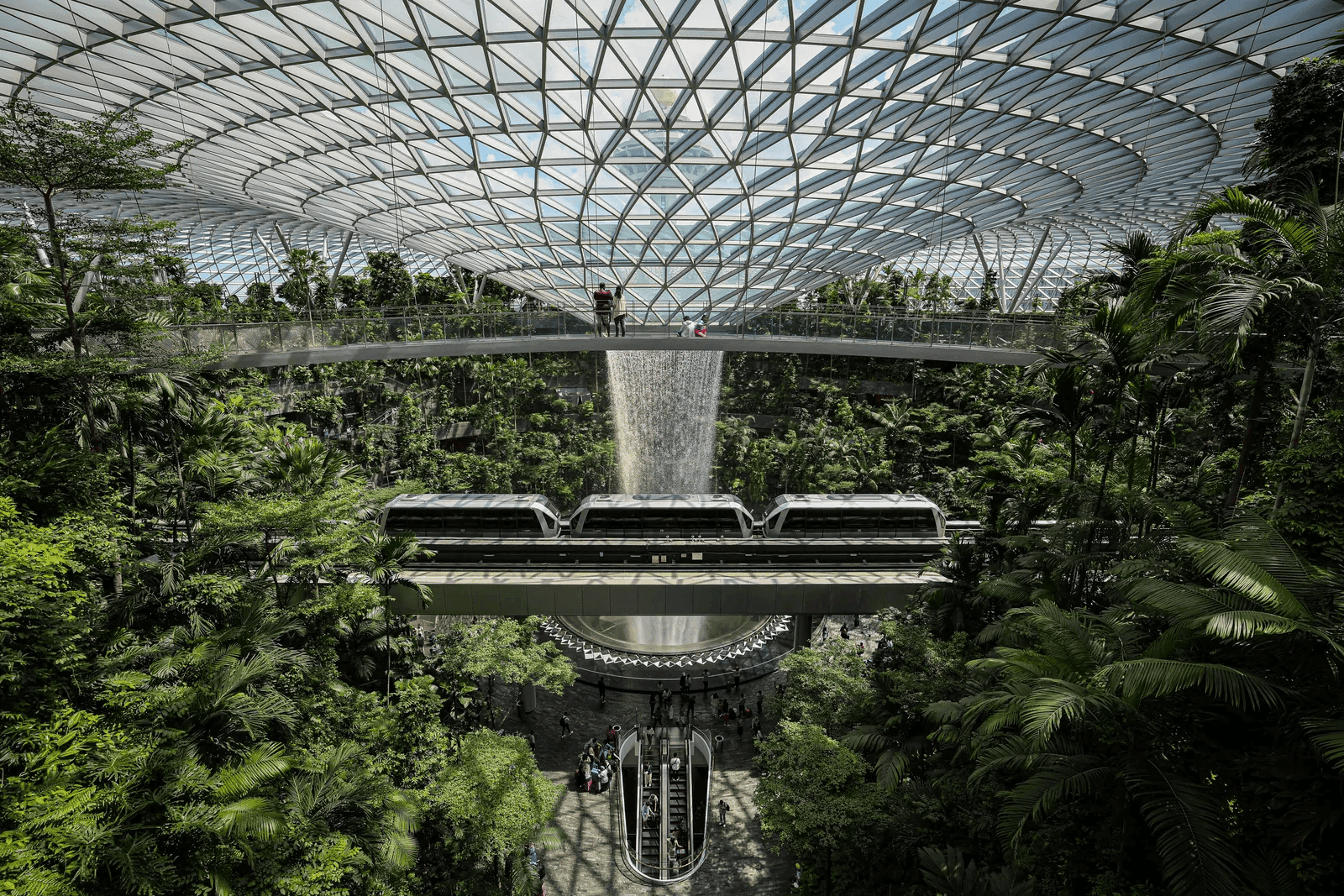
Singapore is refreshingly easy to reach from India: a verified travel agent sorts the visa in three to five days for a few thousand rupees. Pack an eSIM, a Type G adapter, a forex card, and an umbrella, because the city is hot and humid year-round. The sightseeing started before I even left the airport, with Changi’s Jewel, an indoor waterfall ringed by gardens that you just stand and stare at. From there the MRT does the rest (cheap, spotless, and faster than any cab), with an NUS shuttle waiting at the nearest station. By 8pm I was on campus, settling in for the week.
The Campus
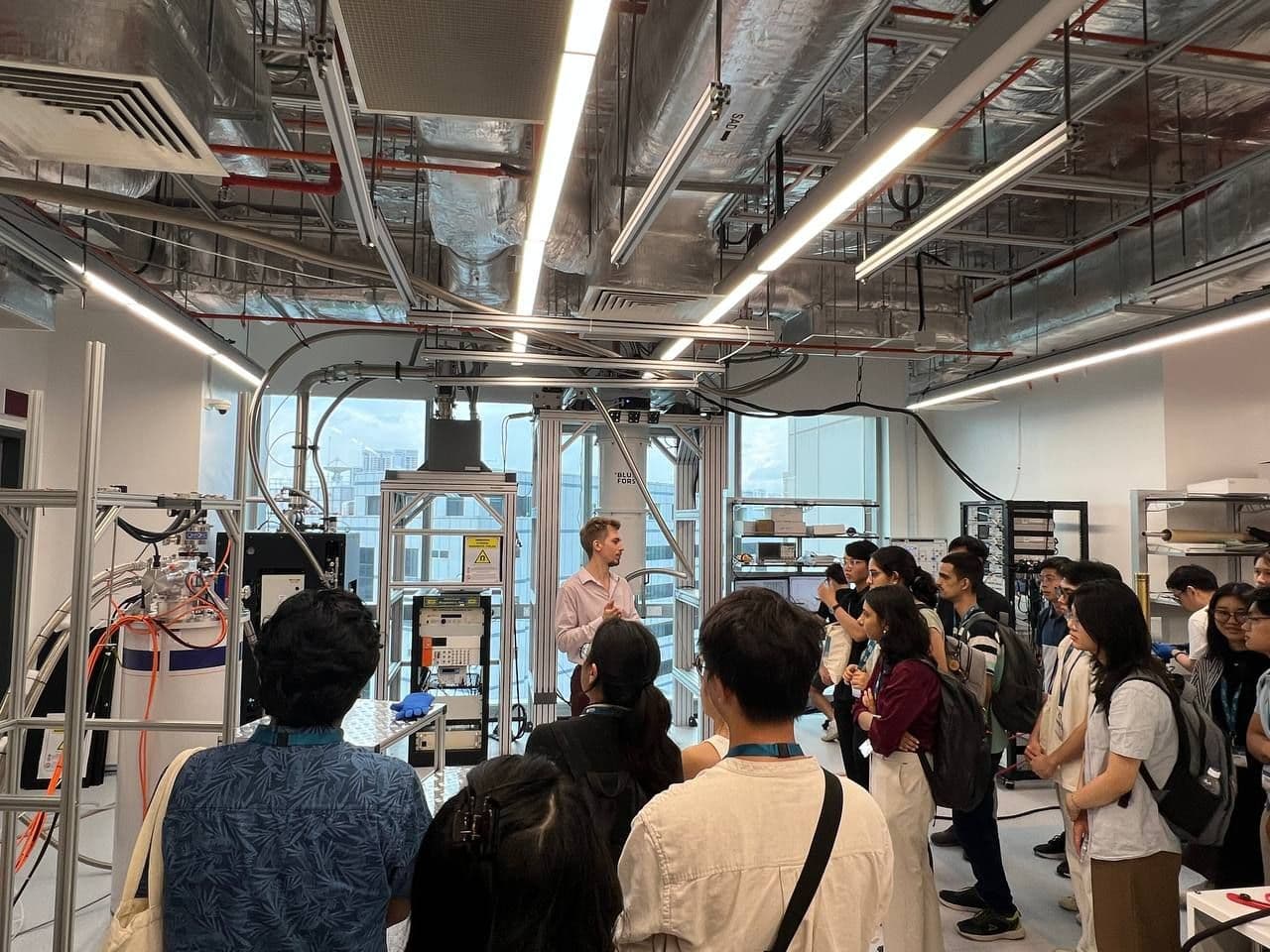
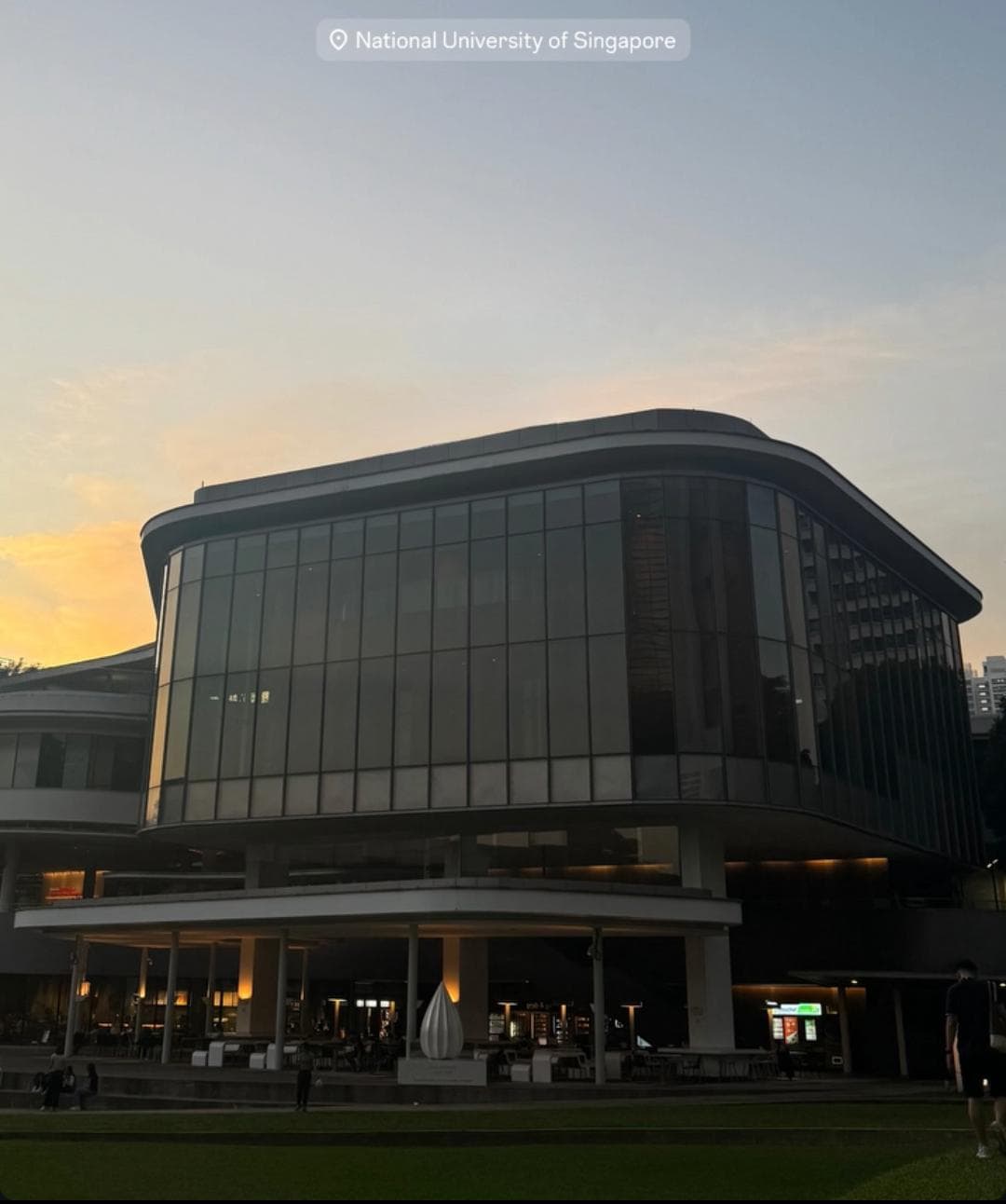
NUS has the most unusual campus I’ve ever set foot on: completely open, no gates, no fences, just blending straight into the city. Free, air-conditioned shuttles loop the whole place on schedule, riding elevated roads while traffic zips past below. The greenery is everywhere and clearly intentional, right down to a showerhead that glows green and turns red when you’ve used too much water (a small thing that genuinely made me rethink my habits). The buildings had everything: cavernous auditoriums, open study lounges, and labs kitted out with gear that looked pricier than the building around it.
The Programme
Five days, 9 to 5, packed with talks, workshops, and lab visits, with the evenings left gloriously free. Once Prof. Jessica Pan and Prof. Chai Kah Hin set the week’s big question (how does generative AI affect PhD research?), faculty from across NUS took turns rewiring how I thought about my own field. Three sessions have stayed with me since.
What Is Generative AI?
Prof. Amirhassan Monajemi took us from Boltzmann machines all the way to today’s LLMs and agents, landing on one line I keep coming back to: we’ve gone from simulating intelligence to learning it. He didn’t skip the dark side, and the part that unsettled me most was skill degradation, the slow dulling of your own abilities when you let AI do the thinking. His proof: an MIT study where students who wrote with LLMs looked sharper in the short run but went shallower over time. That one stuck.
Data-Centric AI
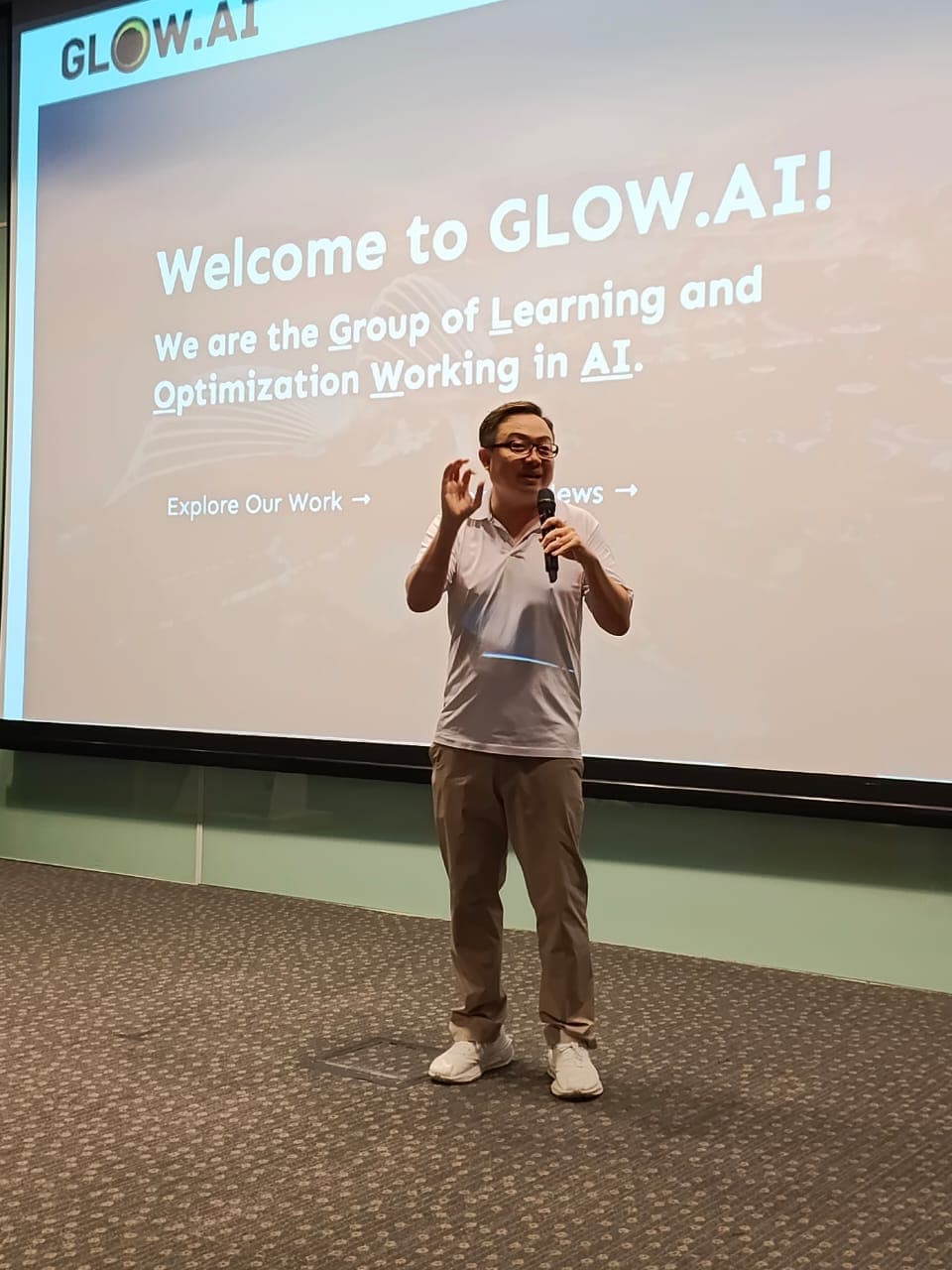
The most counterintuitive talk, from Prof. Bryan Low, flipped a belief I didn’t know I was holding: bigger models are really a data problem, not a compute one. With the right 5% of a dataset, carefully curated, you can beat training on the full 100%. The idea that lingered, though, was machine unlearning, teaching a trained model to forget specific, sensitive information on demand. (More from his lab at glow.ai.)
Designing with Empathy
My favourite of the week. Prof. Suranga Nanayakkara showed off projects from his Augmented Human Lab that flatly refuse to assume vision is the default interface, like a wearable reading aid for the visually impaired and an ear turned into an input surface. His one piece of advice has outlived every other note I took: reframe the problem. Don’t build a better alarm clock; figure out how to make people wake up on time. Most of us put up with bad solutions. The people who notice are the ones who build the new ones.
The Cohort
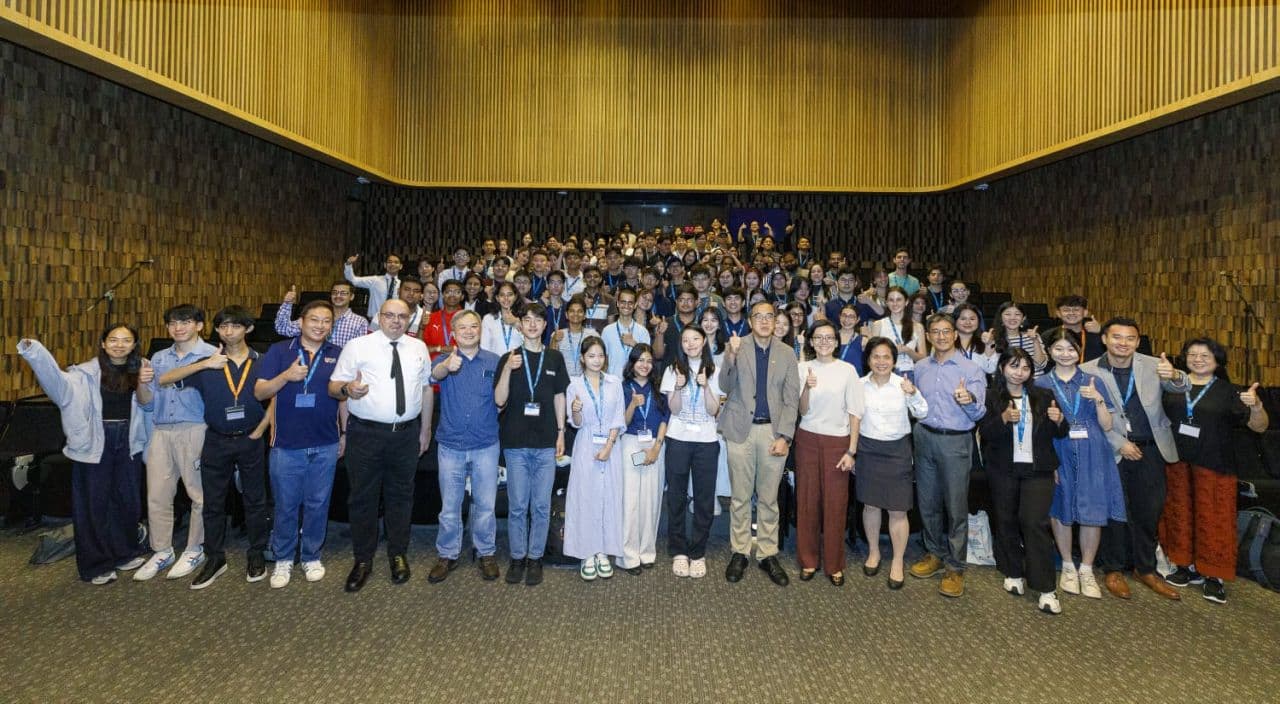
A hundred fellows from twenty-two countries, all stubbornly optimistic about fixing something: engineers, designers, economists, biologists. Breakfast at Cinnamon College was where the real conversations happened. We’d trade greetings in our own languages, argue about research over coffee, and inevitably arrive at the truly universal icebreaker: how do you swear in your language?
Being around people this good accelerates something. The energy of the room raises your own ceiling without anyone saying a word about it.
The Team Project
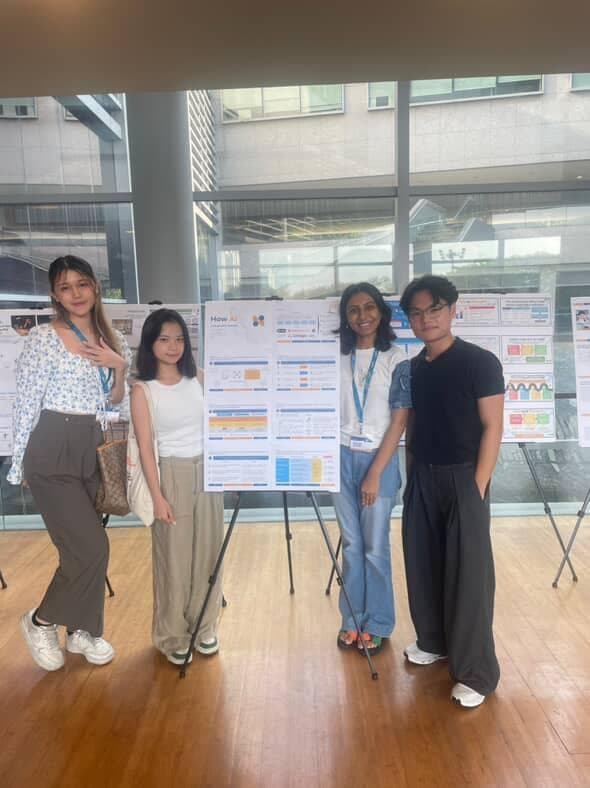
The challenge: form a team, stake out a research angle on AI in PhD work, and pitch it as a poster plus a three-minute thesis talk. My team chased the idea of an AI collaborator, not a fully automated system, not just a tool, but a thinking partner sitting somewhere in between, one that could float ideas, check claims, and iterate alongside a human.
Sightseeing: Making Every Evening Count
Talks wrapped by 5pm, but Singapore doesn’t do early nights. So I saw the city almost entirely after dark, clocking 20,000 steps a day while my feet staged a quiet mutiny by 11pm. I rarely wandered alone, though, thanks to a small crew from IIT Bombay, Madras, Guwahati, and Kharagpur who turned every evening into a proper group expedition.
Around NUS
Day one was all about mastering the art of getting lost. I rode the campus shuttle to its farthest loops purely for the plot, and launched a serious reconnaissance mission for veg food. Survival tip: being vegetarian in Singapore (and at NUS) is practically a competitive sport. I’ve started just calling myself vegan to dodge the inevitable “but eggs are vegetables, right?” debate.
Clarke Quay
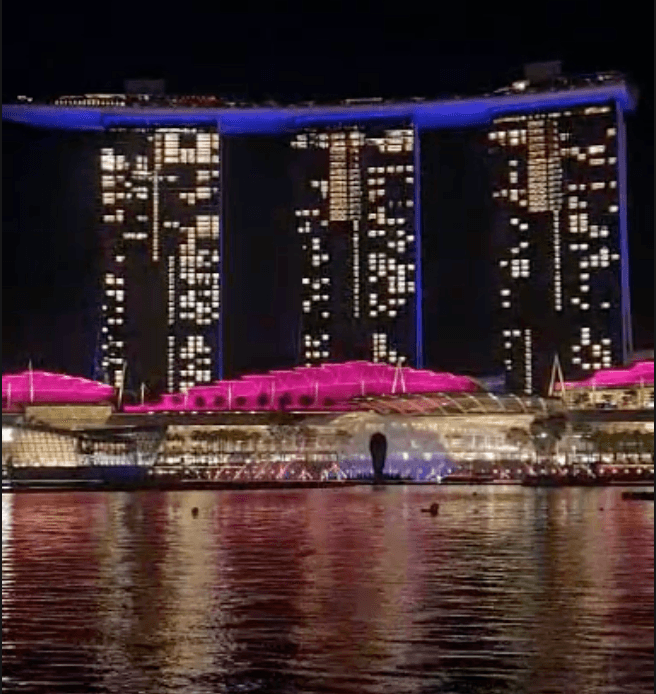
Our first evening took us through the financial district to the riverside at Clarke Quay, then onto a 30-minute river cruise that narrated the city’s architecture as we drifted past it. Front-row seats to Marina Bay Sands, the Merlion, and the light-and-fountain show, with the whole skyline shimmering on the water. Not a bad way to meet a city.
Chinatown
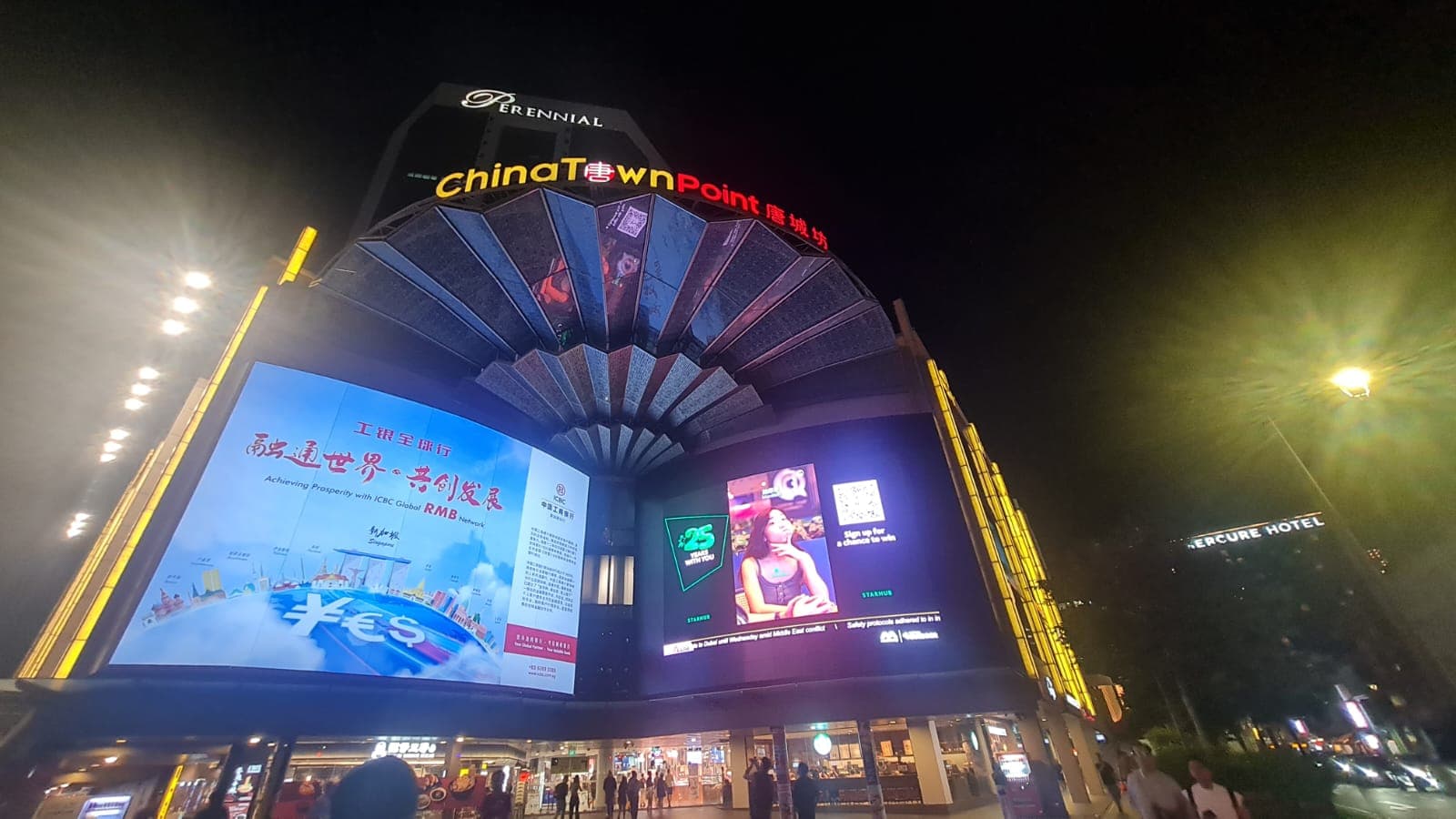
Bright, loud, and absolutely overflowing with food. Enough souvenir shops to bankrupt a careful budget, and worth every step.
Gardens by the Bay & Cloud Forest
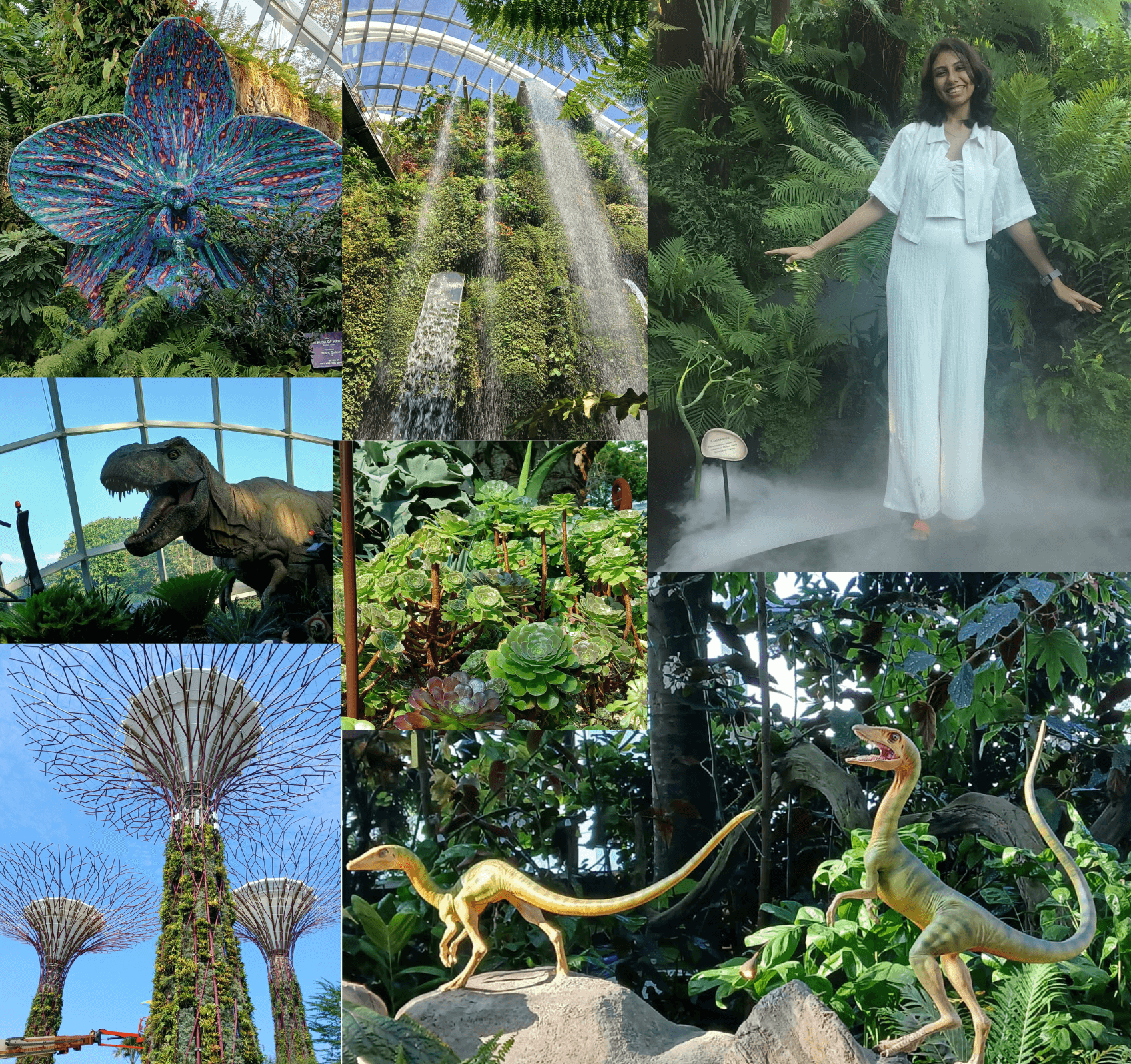
NUS bussed us out to the Gardens, and walking past the Supertrees at dusk was something else. The Cloud Forest conservatory wraps around a 35-metre indoor waterfall, one of the tallest in the world, set inside a misty mountain landscape of some 72,000 plants. During our visit the dome had gone full Jurassic World, so the climb through the cloud-soaked walkways came with the surreal bonus of life-sized dinosaurs lurking in the greenery.
Marina Bay Sands Skyline & Floating Apple Store
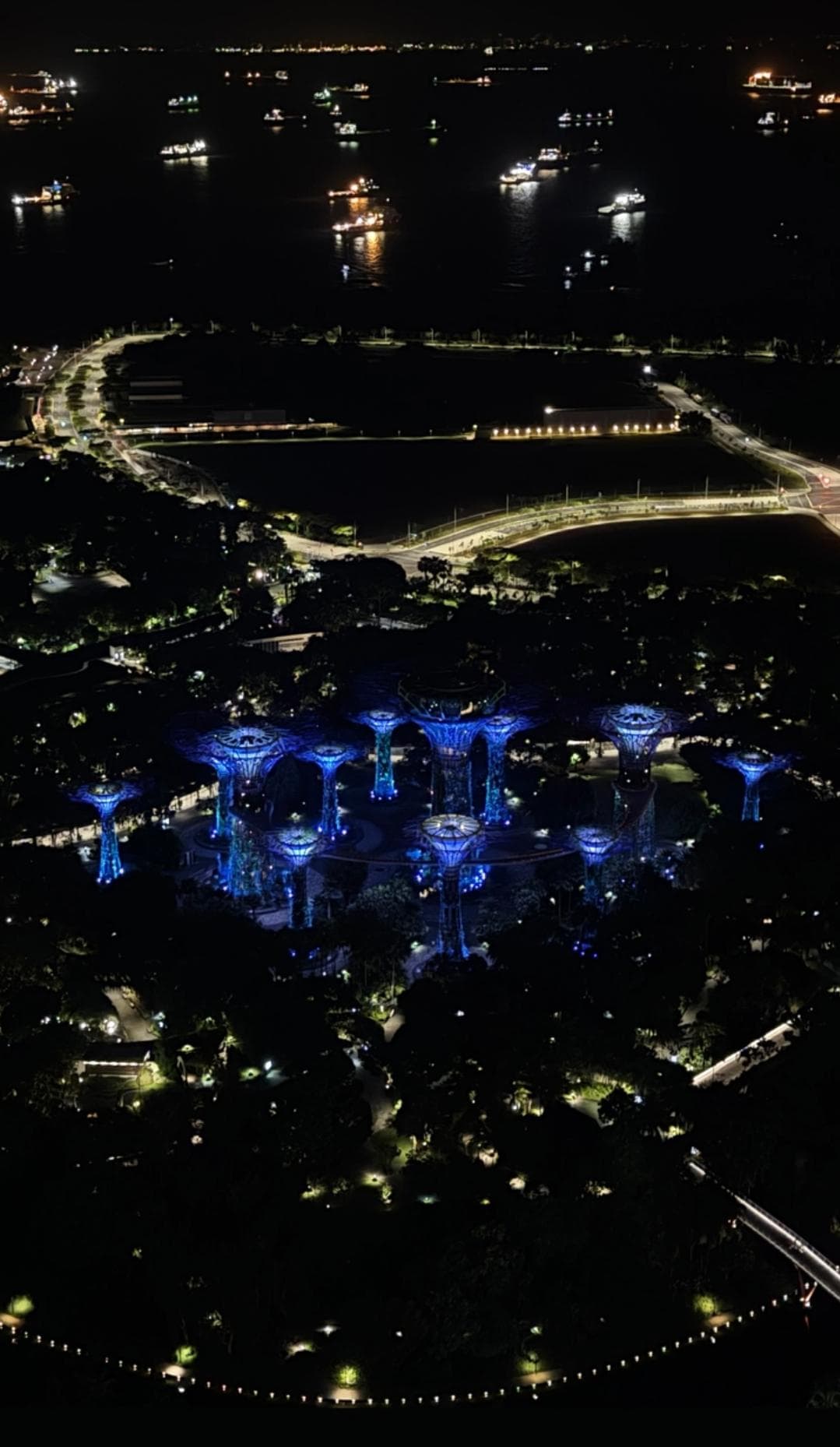
We rode up to the SkyPark Observation Deck on the 57th floor of Marina Bay Sands, where the three towers fuse into that famous ship-shaped platform. From up there, all of Singapore unspools below you: Gardens by the Bay, the Esplanade’s durian-shaped domes, the river threading into the business district. Back at ground level, we spent the night roaming the malls, including the glass-domed Apple Store that looks like it’s floating on the bay.
Sentosa Island
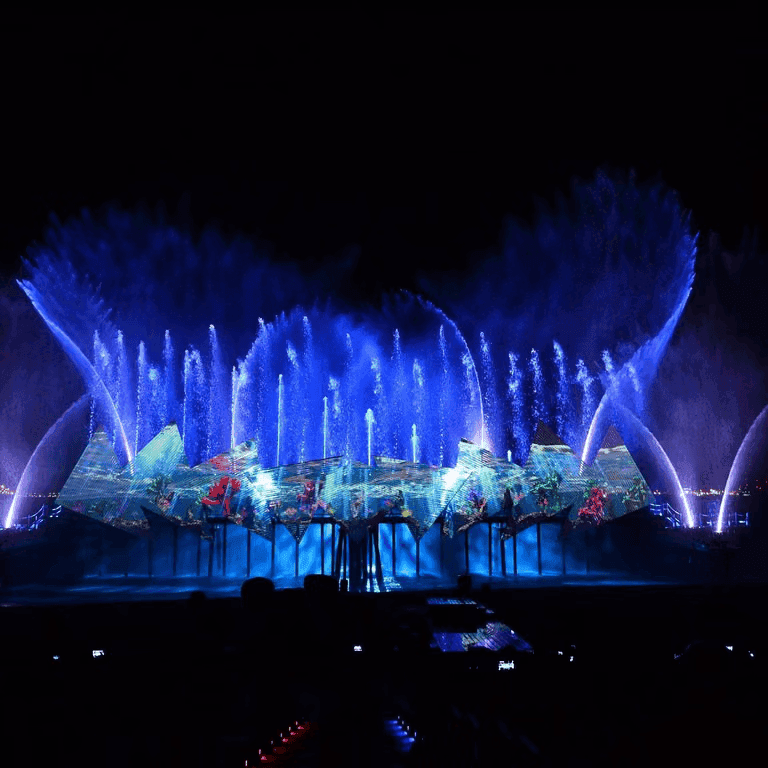
We closed out the trip on Sentosa’s beaches with Wings of Time, the nightly show on Siloso Beach that throws water screens, lasers, fire, and music into one 20-minute story against the open sea. A fitting finale.
What I Learned
- Ask a sharper question. Research isn’t about faster answers. The best sessions kept circling back to whether we were even asking the right thing.
- Cross-disciplinary thinking is slow at first, unstoppable later. A biologist and an ML engineer in one room reach ideas neither could alone.
- Good leadership looks a lot like good listening. The most impressive people in the room were the ones asking questions, not giving speeches.
- Skill degradation is real. Leaning on AI is a quiet tax on your own abilities. Treat it as a thinking partner, not a crutch.
- Say yes to what takes you across borders, both intellectual and geographic. The overlap is where the best things happen.
If AI can already do the research you’re pursuing, you’re not asking the right question. Aim for what machines can’t replicate.
Coming Home
I came home with a notebook full of half-formed ideas, a group chat that still sparks at odd hours across different time zones, and a much clearer sense of direction. NUS pushed me toward a path where rigorous research meets industry, and it reshaped my thinking in not just the work I want to do, but the person I want to become along the way.
Some experiences hand you answers. The best ones hand you better questions. The NUS Young Fellowship was firmly the latter.